
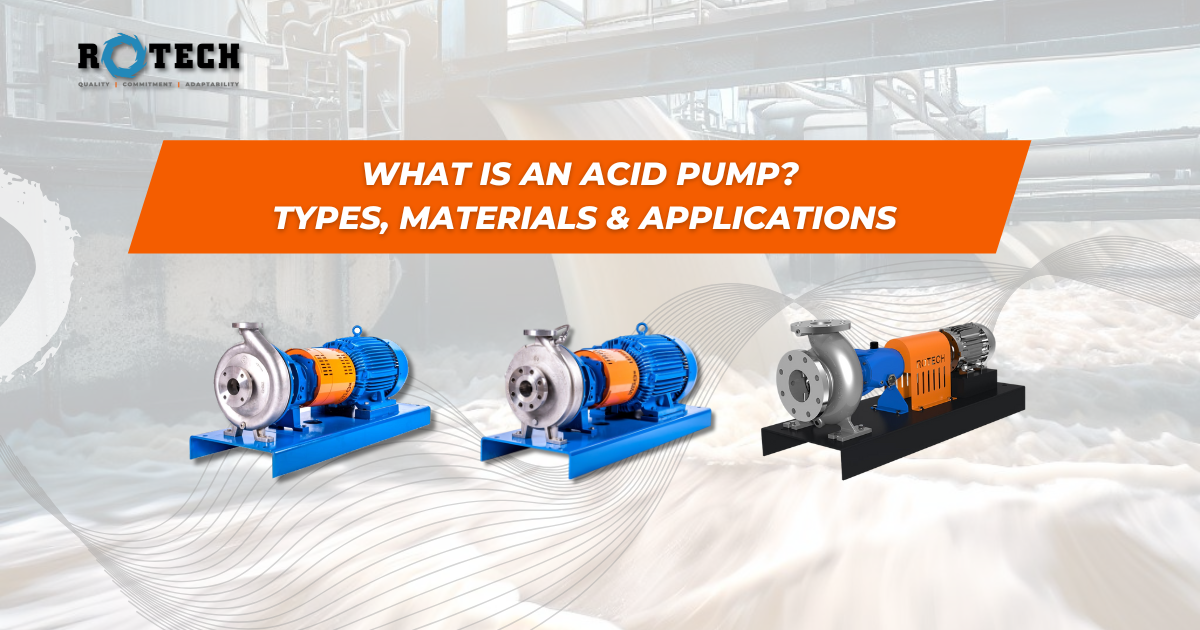
Handling corrosive acids in industrial settings requires specialized equipment that can withstand extreme chemical environments. An acid pump is specifically designed to transfer corrosive acidic fluids safely and efficiently across various industrial operations. These specialized pumps protect both workers and facilities from hazardous chemical exposure while maintaining operational reliability.
Acid pumps feature corrosion-resistant materials, chemical-compatible seals, and robust construction to handle aggressive fluids ranging from sulfuric acid to hydrochloric acid. Industries including chemical processing, pharmaceuticals, mining, metal finishing, and water treatment rely on these pumps daily. The global chemical pump market was valued at approximately $8.2 billion in 2023, with acid-resistant pumps representing a significant segment due to increasing industrial chemical processing demands.
This guide explains everything you need to know about acid pumps, from basic working principles to material selection, types, applications, and maintenance requirements. Whether you’re selecting a pump for a new installation or troubleshooting an existing system, understanding these critical components ensures safe and efficient acid handling operations.
What is an Acid Pump?
An acid pump is a specialized type of chemical pump engineered to move corrosive acidic liquids from one location to another. Unlike standard pumps, these units incorporate materials and design features that resist chemical attack, degradation, and failure when exposed to acids.
The primary function involves creating flow through mechanical action, typically using centrifugal force or positive displacement mechanisms. When acidic fluids enter the pump, the rotating impeller or displacement mechanism generates pressure that moves the liquid through the discharge outlet. The entire fluid pathway uses corrosion-resistant materials to prevent chemical damage.
Key Characteristics
Acid pumps differ from standard pumps in several important ways:
Chemical Compatibility: All wetted parts use materials that resist specific acids being pumped. This includes the casing, impeller, shaft, seals, and gaskets.
Seal Systems: Advanced mechanical seals or magnetic drive systems prevent acid leakage and protect bearings from corrosive fluid exposure.
Material Selection: Components feature specialized alloys, plastics, or composite materials rated for specific acid concentrations and temperatures.
Safety Features: Many designs include secondary containment, leak detection, and fail-safe mechanisms to prevent hazardous spills.
Durability: Robust construction ensures long service life despite aggressive chemical environments.
The working principle remains similar to standard centrifugal pumps, but material selection and design modifications make the difference between safe operation and catastrophic failure.
Types of Acid Pumps
Several pump designs effectively handle acidic fluids, each offering unique advantages for specific applications. Selecting the right type depends on factors including acid concentration, temperature, flow rate, pressure requirements, and viscosity.
Centrifugal Acid Pumps
Centrifugal pumps represent the most common choice for acid transfer applications. These pumps use a rotating impeller to add velocity to the fluid, converting this kinetic energy into pressure.
How They Work: An impeller mounted on a rotating shaft spins inside a volute casing. As the impeller rotates, centrifugal force throws liquid outward, creating low pressure at the center that draws more fluid in. The volute converts velocity into pressure as fluid exits the discharge.
Advantages:
- High flow rates with relatively low maintenance
- Smooth, continuous flow without pulsation
- Simple design with fewer moving parts
- Cost-effective for most acid handling applications
- Available in various configurations including end suction pumps and split case designs
Limitations:
- Not self-priming in most configurations
- Less efficient with high-viscosity fluids
- Performance varies with system pressure changes
ANSI pumps follow standardized dimensions, making them popular for chemical processing facilities requiring interchangeable equipment.
Magnetic Drive Pumps
Magnetic drive pumps eliminate the shaft seal entirely by using magnetic coupling to transfer power from the motor to the impeller. This design provides zero-leakage operation, making it ideal for highly toxic or corrosive acids.
Design Features: An outer magnet ring connects to the motor shaft outside the pump casing. An inner magnet ring attaches to the impeller inside the casing. A non-magnetic containment shell separates the two magnet assemblies while allowing magnetic force to couple them.
Benefits:
- Complete elimination of seal leakage
- Reduced maintenance requirements
- Enhanced safety for toxic acids
- No contamination from bearing lubrication
- Compliance with strict environmental regulations
Considerations:
- Higher initial cost than sealed pumps
- Limited to specific temperature ranges
- Potential for magnet decoupling under high loads
- More complex repair procedures
Vertical Sump Pumps
Vertical sump pumps mount vertically with the motor above the liquid level and the pump submerged in the acid storage tank. This configuration works well for tank drainage and transfer applications.
Applications: Common in plating operations, pickling baths, and chemical storage systems where the pump must operate in limited floor space.
Advantages:
- Saves floor space
- Self-priming operation
- Pump positioned below liquid level
- Easy access for maintenance
- No suction line required
Air-Operated Diaphragm Pumps
These positive displacement pumps use compressed air to flex diaphragms that move fluid. They offer excellent chemical compatibility and can run dry without damage.
Operation: Compressed air alternately inflates diaphragms on each side of the pump, creating suction and discharge strokes. Check valves direct fluid flow in one direction.
Key Features:
- Self-priming with good suction lift
- Can handle solids and viscous fluids
- Explosion-proof operation
- Adjustable flow by regulating air pressure
- Can run dry indefinitely
Drawbacks:
- Pulsating flow
- Requires compressed air supply
- Lower efficiency than centrifugal designs
- More maintenance due to diaphragm wear
Gear Pumps
Positive displacement gear pumps use rotating gears to move fluid. While less common for very corrosive acids, they work well for viscous acid formulations requiring precise metering.
Suitable For: Battery acid transfer, viscous chemical processing, and applications requiring consistent flow regardless of pressure.
Characteristics:
- Precise flow control
- Good for high-viscosity liquids
- Self-priming capability
- Positive displacement action
- Requires proper material selection for acid resistance
Materials Used in Acid Pump Construction
Material selection represents the most critical decision when specifying an acid pump. The wrong material choice leads to rapid corrosion, contamination, and pump failure. Each acid type, concentration, and operating temperature requires specific material compatibility.
Common Acid-Resistant Materials
| Material | Acid Resistance | Temperature Range | Common Applications | Cost |
|---|---|---|---|---|
| PTFE (Teflon) | Excellent for most acids | Up to 260°C | Universal acid resistance | High |
| PVDF (Kynar) | Excellent for oxidizing acids | Up to 150°C | Chlorine, sulfuric acid | Medium-High |
| Polypropylene | Good for many acids | Up to 90°C | General acid transfer | Low |
| 316 Stainless Steel | Good for mild acids | Up to 400°C | Phosphoric acid, dilute acids | Medium |
| Hastelloy C | Excellent for most acids | Up to 540°C | Severe corrosive service | Very High |
| Titanium | Excellent for oxidizing acids | Up to 300°C | Nitric acid, chlorine | Very High |
Thermoplastics
PTFE (Polytetrafluoroethylene): Often called Teflon, PTFE offers nearly universal chemical resistance. It handles concentrated sulfuric acid, hydrochloric acid, nitric acid, and mixed acids across wide temperature ranges. PTFE-lined pumps combine the strength of metal casings with PTFE’s chemical resistance.
PVDF (Polyvinylidene Fluoride): This fluoropolymer provides excellent resistance to oxidizing acids and chlorinated compounds. PVDF pumps cost less than PTFE while maintaining good mechanical strength and chemical resistance up to 150°C.
Polypropylene (PP): An economical choice for less demanding acid applications. Polypropylene resists many acids at moderate temperatures and concentrations but degrades with strong oxidizing acids.
Metallic Materials
316 Stainless Steel: Standard stainless steel works for dilute acids and specific applications like phosphoric acid. However, chlorides attack stainless steel, causing pitting and stress corrosion cracking. Always verify compatibility before use.
Hastelloy C-276: This nickel-molybdenum-chromium alloy resists a broad range of corrosive chemicals including hot contaminated sulfuric acid, hydrochloric acid, and mixed acids. The high cost justifies its use in severe service conditions.
Titanium: Outstanding resistance to oxidizing acids, especially nitric acid and chlorine compounds. Titanium pumps serve in applications where other materials fail, though the high material cost limits usage to critical applications.
Alloy 20: This austenitic stainless steel contains copper, nickel, and molybdenum. It specifically resists sulfuric acid and shows good resistance to stress corrosion cracking.
Seal and Gasket Materials
Mechanical seals and gaskets require equal attention to material compatibility:
Carbon/Silicon Carbide: Common face materials for mechanical seals. Silicon carbide offers better wear resistance in abrasive acid services.
PTFE and Filled PTFE: Used for secondary seals, O-rings, and gaskets. Filled versions add strength while maintaining chemical resistance.
Kalrez/Chemraz: Perfluoroelastomers providing elasticity with chemical resistance similar to PTFE. These expensive materials suit demanding seal applications.
EPDM (Ethylene Propylene): Suitable for some acids but not for oxidizing acids or solvents. Verify compatibility before specifying.
Proper material selection requires understanding the specific acid, concentration, operating temperature, and any contamination. Chemical resistance charts from pump manufacturers and material suppliers provide guidance, but testing with actual process fluids gives the most reliable results.
Key Applications of Acid Pumps
Acid pumps serve critical functions across numerous industries where corrosive chemical handling forms part of core operations. Understanding these applications helps in selecting appropriate pump types and materials.
Chemical Manufacturing and Processing
Chemical plants produce and handle various acids as raw materials, intermediates, and products. Chemical process pumps must reliably transfer acids between reactors, storage tanks, and processing equipment.
Typical Operations:
- Transferring concentrated sulfuric acid for alkylation processes
- Moving hydrochloric acid in chlorination reactions
- Handling nitric acid in fertilizer production
- Pumping phosphoric acid for chemical synthesis
Chemical facilities often use ANSI standard pumps for their interchangeability and standardized maintenance procedures.
Metal Finishing and Surface Treatment
Metal finishing operations use acid baths for cleaning, pickling, etching, and plating. Pumps circulate acidic solutions through tanks and transfer spent solutions to treatment systems.
Common Processes:
- Steel pickling with hydrochloric or sulfuric acid
- Aluminum etching with nitric or phosphoric acid
- Electroplating bath circulation
- Passivation treatments for stainless steel
These applications typically require vertical sump pumps or magnetic drive pumps to handle recirculation and prevent contamination.
Mining and Mineral Processing
Mining operations employ acids for ore leaching, mineral extraction, and processing. These demanding environments require robust pumps handling slurries, varying concentrations, and outdoor conditions.
Mining Applications:
- Copper leaching with sulfuric acid
- Uranium extraction processes
- Gold recovery operations
- Phosphate rock processing
Mining applications often benefit from trash pumps modified with acid-resistant materials for handling solids-laden acidic slurries.
Water and Wastewater Treatment
Municipal and industrial water treatment facilities use acids for pH adjustment, neutralization, and treatment processes. Accurate dosing and reliable transfer ensure proper water chemistry.
Treatment Applications:
- pH adjustment in water treatment plants
- Neutralization of alkaline wastewater
- Scale removal and cleaning operations
- Reverse osmosis membrane cleaning
Chemical feed pumps and chemical injection pumps provide precise acid dosing for these applications.
Pharmaceutical and Biotechnology
Pharmaceutical manufacturing requires extremely pure acid handling with no contamination risk. These applications demand high-quality materials and sanitary designs.
Pharmaceutical Uses:
- API synthesis and processing
- pH adjustment in fermentation
- Cleaning validation protocols
- Buffer preparation systems
Magnetic drive pumps with FDA-compliant materials suit pharmaceutical applications requiring zero-leakage operation.
Food and Beverage Processing
Food-grade acids like citric, acetic, and phosphoric acid require pumps meeting food safety standards. Pumps used in food industry applications must use approved materials and sanitary designs.
Food Processing Applications:
- Beverage acidification and pH control
- Cleaning-in-place (CIP) systems
- Dairy processing operations
- Fruit juice production
Petroleum Refining
Refineries use sulfuric acid in alkylation units and for catalyst regeneration. These high-volume applications require reliable pumps handling concentrated acid at elevated temperatures.
Refinery Applications:
- Alkylation unit acid circulation
- Spent acid recovery systems
- Catalyst regeneration processes
- Crude desalting operations
Understanding application requirements helps match pump design, materials, and features to specific operational needs, ensuring safe and efficient acid handling.
How to Select the Right Acid Pump
Choosing the correct acid pump involves evaluating multiple factors beyond basic flow and pressure requirements. A systematic selection process prevents costly mistakes and ensures safe, reliable operation.
Critical Selection Criteria
1. Chemical Compatibility
First identify the specific acid, concentration, and temperature. Obtain a complete chemical analysis including:
- Acid type and concentration range
- Operating temperature extremes
- Contamination or mixed chemicals
- Potential for temperature spikes
- pH levels during operation
Cross-reference this information with manufacturer chemical resistance charts. When pumping mixed chemicals, verify compatibility with all components.
2. Flow Rate and Pressure Requirements
Determine required performance parameters:
- Flow Rate: Measured in gallons per minute (GPM) or liters per minute (LPM)
- Total Head: The vertical distance plus friction losses the pump must overcome
- System Pressure: Operating pressure at the discharge point
- NPSH Available: Net positive suction head available must exceed pump NPSH required to prevent cavitation
Consider future capacity increases when sizing pumps. Operating pumps at 70-80% of maximum capacity extends service life and improves efficiency.
3. Viscosity Considerations
Liquid viscosity significantly affects pump selection and performance. Water-thin acids suit centrifugal pumps, while viscous formulations may require positive displacement pumps.
High-viscosity fluids reduce centrifugal pump flow rate and efficiency. Manufacturers provide correction factors for viscous applications.
4. Solid Content
Some acid processes contain suspended solids from reaction byproducts or contamination. Determine:
- Particle size distribution
- Solid concentration percentage
- Abrasiveness of particles
- Settlement characteristics
Pumps with open or semi-open impellers handle solids better than closed impellers. Trash pumps with acid-resistant materials suit heavily contaminated streams.
5. Temperature Effects
Operating temperature impacts both pump hydraulics and material compatibility. High temperatures:
- Reduce fluid viscosity and density
- Affect material strength and corrosion rates
- Influence seal and gasket selection
- Impact vapor pressure and cavitation risk
Verify all component materials remain compatible across the full temperature range.
6. Installation Constraints
Physical installation factors influence pump selection:
- Available Floor Space: Compact designs like close-coupled or vertical pumps suit limited areas
- Suction Conditions: Submerged, flooded suction, or suction lift configurations
- Accessibility: Maintenance access and service clearances
- Environmental Conditions: Indoor, outdoor, hazardous area classifications
7. Safety and Regulatory Compliance
Consider safety requirements and regulations:
- Secondary containment for leak protection
- Emergency shutdown systems
- Grounding and bonding requirements
- Local fire and building codes
- EPA and OSHA regulations for chemical handling
Magnetic drive pumps eliminate shaft seal leakage, enhancing safety for highly toxic acids.
Comparing Pump Types
| Application Factor | Centrifugal | Magnetic Drive | Diaphragm | Gear |
|---|---|---|---|---|
| High Flow Rate | Excellent | Good | Fair | Fair |
| High Pressure | Good | Good | Excellent | Excellent |
| Viscous Fluids | Fair | Fair | Good | Excellent |
| Solids Handling | Good | Poor | Excellent | Poor |
| Precise Metering | Poor | Poor | Good | Excellent |
| Low Maintenance | Excellent | Excellent | Fair | Good |
| Initial Cost | Low | Medium-High | Medium | Medium |
Professional Pump Selection
For critical applications, consult with pump manufacturers or engineering firms specializing in corrosive chemical handling. Professional guidance helps avoid mistakes that compromise safety or performance. Resources like how to select the right pump provide additional selection guidance.
Installation and Maintenance Best Practices
Proper installation and maintenance extend acid pump life while preventing hazardous failures. Following manufacturer guidelines and industry best practices ensures safe, reliable operation.
Installation Guidelines
Pump Location and Mounting
Position pumps for easy access while maintaining safety distances from acid storage areas. Install on level, vibration-free foundations with adequate support. Baseplate grouting must prevent movement and misalignment.
For end suction pump installation, ensure proper alignment between pump and motor shafts. Misalignment causes premature bearing and seal failure.
Piping Considerations
Design suction piping to minimize friction losses and prevent air entrainment:
- Use short, straight suction runs when possible
- Avoid high points that trap air
- Size piping for velocities between 3-6 feet per second
- Install eccentric reducers at pump suction (flat side up)
- Support piping independently to prevent stress on pump
Provide adequate NPSH to the pump inlet. Insufficient NPSH causes cavitation, reducing performance and damaging impellers.
Priming and Initial Startup
Before starting, ensure proper priming:
- Fill pump casing with liquid for non-self-priming centrifugal pumps
- Open suction valve fully
- Crack open discharge valve slightly
- Verify rotation direction matches pump marking
- Check for proper motor amperage
Never run centrifugal pumps dry. Even brief dry running damages mechanical seals and internal components.
Preventive Maintenance Program
Regular maintenance prevents unexpected failures and extends equipment life. Implement a comprehensive program covering:
Daily Inspections
- Check for unusual noise or vibration
- Verify proper flow and pressure readings
- Inspect for leaks around seals and connections
- Monitor motor temperature and amperage
- Look for signs of corrosion or damage
Weekly Tasks
- Test and record pump performance parameters
- Inspect seal flush systems and cooling water
- Check bearing temperatures and lubrication
- Verify proper operation of safety systems
- Document any changes from baseline conditions
Monthly Maintenance
- Detailed visual inspection of all components
- Bearing lubrication per manufacturer schedule
- Alignment checks for coupled pumps
- Calibrate instruments and sensors
- Test emergency shutdown systems
Quarterly Services
- Vibration analysis and trending
- Detailed seal system inspection
- Review wear patterns on impellers
- Check coupling condition
- Update maintenance records
Common Maintenance Issues
Understanding typical problems helps prevent failures:
Seal Leakage: Most common acid pump issue. Causes include:
- Improper installation or adjustment
- Insufficient flush or cooling
- Chemical attack on seal faces
- Excessive vibration or misalignment
- Normal wear after extended service
Address seal leaks immediately to prevent bearing damage and environmental hazards.
Cavitation Damage: Appears as pitting on impeller surfaces. Preventing cavitation in centrifugal pumps requires adequate NPSH, proper operation, and monitoring for system changes.
Bearing Failures: Result from:
- Improper lubrication
- Contamination from seal leakage
- Misalignment
- Excessive loads
- Extended service life
Regular lubrication and monitoring prevent most bearing problems.
Corrosion and Erosion: Even acid-resistant materials eventually degrade. Monitor wear patterns and replace components before failure.
Safety During Maintenance
Working on acid pumps requires strict safety procedures:
- Lock out and tag out equipment before maintenance
- Drain and flush systems thoroughly
- Use proper personal protective equipment
- Have emergency eyewash and shower nearby
- Follow confined space procedures when applicable
- Properly dispose of contaminated materials
Review site-specific safety protocols before any maintenance work. Additional guidance on chemical pump maintenance helps establish effective programs.
Establishing comprehensive centrifugal pump maintenance checklist procedures ensures consistent care across your facility.
Safety Considerations When Handling Acid Pumps
Working with acid pumps involves significant hazards requiring strict safety protocols. Protecting personnel, equipment, and the environment demands comprehensive safety planning and training.
Personal Protective Equipment (PPE)
Minimum PPE requirements for acid handling include:
- Chemical-resistant gloves rated for specific acids
- Face shields and safety goggles
- Acid-resistant aprons or suits
- Chemical-resistant boots
- Respiratory protection when vapor hazards exist
Select PPE based on acid concentration, temperature, and potential exposure scenarios. Never compromise on protective equipment quality.
Leak Detection and Containment
Implement multiple protection layers:
Primary Containment: The pump casing and seals form the first barrier. Specify quality components appropriate for service conditions.
Secondary Containment: Install drip pans, containment basins, or sealed pump rooms to capture leaks. Size containment to hold the largest potential spill volume.
Leak Detection: Deploy sensors and alarms that alert operators to seal leakage before major spills occur. Options include:
- Visual inspection windows
- Moisture detection sensors
- pH monitoring systems
- Automatic shutdown systems
Emergency Response: Maintain spill kits with neutralizing agents, absorbents, and PPE near acid handling areas. Train personnel on spill response procedures.
Safe Transfer Practices
Transferring corrosive chemicals safely requires careful procedures:
Before Transfer
- Verify receiving tank has adequate capacity
- Check all connections and valves
- Confirm pump and piping compatibility
- Review safety data sheets
- Notify affected personnel
During Transfer
- Monitor flow rates and pressures
- Watch for leaks or unusual conditions
- Maintain communication with operators
- Keep emergency equipment accessible
- Never leave unattended
After Transfer
- Flush transfer lines if appropriate
- Close and secure valves
- Document transfer volumes
- Inspect equipment for damage
- Clean up any spills immediately
Hazardous Area Classification
Many acid handling areas require electrical equipment rated for hazardous locations. Classification depends on:
- Vapor flammability characteristics
- Concentration and release potential
- Ventilation adequacy
- Operating conditions
Install explosion-proof or intrinsically safe equipment where regulations require. Consult with qualified electrical engineers for proper classification.
Training Requirements
Comprehensive training ensures safe operations:
- Acid hazards and properties
- Proper PPE selection and use
- Pump operation procedures
- Emergency response protocols
- Maintenance safety practices
- Regulatory compliance requirements
Conduct regular refresher training and document all sessions. New employees should complete thorough orientation before working with acid systems.
Regulatory Compliance
Various regulations govern acid handling:
OSHA Standards: Workplace safety requirements for chemical handling, PPE, training, and hazard communication.
EPA Regulations: Environmental protection rules for spill prevention, secondary containment, and discharge limits.
DOT Requirements: Transportation regulations for acid shipments and transfers.
Local Codes: Municipal and state regulations may impose additional requirements.
Stay current with applicable regulations and maintain documentation proving compliance.
Troubleshooting Common Acid Pump Problems
Identifying and resolving pump problems quickly prevents production losses and safety hazards. Understanding common issues helps maintenance teams respond effectively.
Low Flow or Pressure
Symptoms: Reduced flow rate or discharge pressure below normal operating values.
Possible Causes:
- Partially closed discharge or suction valve
- Clogged strainer or impeller passages
- Worn or damaged impeller
- Wrong direction of rotation
- Cavitation from insufficient NPSH
- Air leaks on suction side
Solutions:
- Verify valve positions
- Clean strainers and inspect impeller
- Check motor rotation direction
- Improve suction conditions
- Repair suction line air leaks
- Review system changes affecting performance
Excessive Noise or Vibration
Symptoms: Unusual sounds, rattling, or equipment vibration.
Possible Causes:
- Cavitation
- Misalignment between pump and driver
- Worn bearings
- Bent shaft
- Loose mounting bolts
- Unbalanced impeller
Solutions:
- Verify adequate NPSH available
- Realign pump and motor
- Replace worn bearings
- Check shaft runout
- Tighten mounting hardware
- Balance or replace impeller
Seal Leakage
Symptoms: Fluid dripping from seal area, visible wetness, or product odor.
Possible Causes:
- Normal seal wear
- Improper installation
- Chemical attack on seal faces
- Insufficient seal flush or cooling
- Excessive vibration
- Operating outside design conditions
Solutions:
- Replace worn mechanical seals
- Verify correct installation procedures
- Check material compatibility
- Ensure proper flush flow and pressure
- Address vibration sources
- Operate within specified parameters
Excessive Power Consumption
Symptoms: Higher than normal motor amperage or power draw.
Possible Causes:
- Pumping at higher specific gravity than rated
- Operating too far right on pump curve
- Mechanical binding or drag
- Misalignment
- Closed discharge valve
Solutions:
- Verify fluid properties match design
- Adjust flow to optimal operating point
- Inspect for rubbing or contact
- Correct alignment problems
- Open discharge valve
Premature Component Wear
Symptoms: Frequent replacement needs, reduced service life.
Possible Causes:
- Material incompatibility with process fluid
- Cavitation or erosion
- Abrasive particles in fluid
- Operating outside design envelope
- Poor maintenance practices
Solutions:
- Verify correct material selection
- Improve NPSH conditions
- Install filtration if needed
- Operate within specifications
- Implement better maintenance program
Short Bearing Life
Symptoms: Frequent bearing replacement, overheating, noise.
Possible Causes:
- Improper lubrication
- Contamination from seal leakage
- Misalignment
- Excessive loads
- Wrong bearing type
Solutions:
- Follow lubrication schedule
- Repair seal leaks promptly
- Correct alignment problems
- Reduce piping loads
- Verify correct bearing specification
Understanding these common problems and solutions helps maintenance teams keep acid pumps running reliably. When issues persist, consult manufacturer technical support or pump service specialists.
Frequently Asked Questions (FAQs)
What acids can acid pumps handle?
Acid pumps can handle various corrosive acids including sulfuric acid, hydrochloric acid, nitric acid, phosphoric acid, acetic acid, citric acid, and many others. The specific acids a pump can handle depends on the construction materials. PTFE-lined pumps offer the broadest chemical compatibility, while specialized alloys like Hastelloy work for specific aggressive acids. Always verify chemical compatibility with manufacturer data before pumping any acid.
How do I know which material is best for my acid application?
Material selection requires knowing the specific acid type, concentration, operating temperature, and any contamination. Consult chemical resistance charts from pump manufacturers showing material compatibility across different conditions. For concentrated sulfuric acid, PTFE or Hastelloy often work best. Dilute acids may allow less expensive materials like polypropylene or 316 stainless steel. When uncertain, request material testing or consult with chemical engineers familiar with your specific application.
Can acid pumps handle high temperatures?
Yes, but temperature limits depend on construction materials. PTFE handles temperatures up to 260°C, while metallic materials like Hastelloy withstand even higher temperatures. However, elevated temperatures increase corrosion rates and affect seal performance. Some acids become more aggressive at high temperatures. Always verify all wetted components maintain compatibility across your full operating temperature range, including any upset conditions.
How often should acid pump seals be replaced?
Seal life varies based on operating conditions, acid type, and maintenance quality. Typical mechanical seals in moderate service last 12-24 months. Harsh conditions may require replacement every 3-6 months, while optimal conditions can extend life beyond two years. Monitor seal condition through routine inspections and replace at first signs of leakage. Magnetic drive pumps eliminate this concern by using no shaft seal.
What is the difference between acid pumps and chemical pumps?
The terms often overlap. Chemical pumps broadly describe pumps handling any chemical fluid. Acid pumps specifically focus on corrosive acidic chemicals requiring specialized materials. All acid pumps are chemical pumps, but not all chemical pumps suit acid service. Acid pumps emphasize corrosion resistance, while chemical pumps might prioritize other factors like sanitary design or solids handling depending on the application.
Why is NPSH important for acid pumps?
Net Positive Suction Head (NPSH) prevents cavitation, which damages impellers and reduces performance. Acids often have different vapor pressures than water, affecting NPSH requirements. Insufficient NPSH causes vapor bubbles to form and collapse violently against impeller surfaces, creating pitting damage. This accelerates corrosion in acid service. Always ensure NPSH available exceeds NPSH required by an adequate margin.
Can centrifugal pumps handle viscous acids?
Centrifugal pumps work best with low-viscosity fluids similar to water. Viscous acids reduce flow, pressure, and efficiency. For acids with viscosities above 100 cP, consider positive displacement pumps like gear pumps or diaphragm pumps. These maintain consistent flow regardless of viscosity. If using centrifugal pumps for viscous service, apply manufacturer correction factors when sizing equipment.
How do magnetic drive pumps differ from sealed pumps?
Magnetic drive pumps eliminate the shaft seal by using magnetic coupling to transfer power from motor to impeller. A non-magnetic containment shell separates the motor side from the process side. This provides zero-leakage operation, enhancing safety for toxic acids. Sealed pumps use mechanical seals allowing the shaft to pass through the casing. While less expensive initially, sealed pumps require more maintenance and may leak over time.
What certifications should acid pumps have?
Required certifications depend on industry and location. Common standards include ANSI/ASME pump dimensions for interchangeability, ISO 9001 quality systems, and CE marking for European markets. Hazardous area installations require ATEX or IECEx certification. Pharmaceutical applications need FDA-compliant materials and 3A Sanitary Standards. Chemical compatibility testing following ASTM standards provides material verification. Always specify certifications matching your industry requirements.
Conclusion
Acid pumps play a vital role in safely transferring corrosive chemicals across numerous industries. Selecting the right pump requires understanding acid properties, flow requirements, material compatibility, and operating conditions. Whether choosing centrifugal, magnetic drive, or positive displacement designs, matching pump capabilities to application demands ensures reliable, safe operation.
Proper material selection protects against corrosion and premature failure. PTFE, PVDF, Hastelloy, and other specialized materials each offer specific advantages for different acids and conditions. Taking time to verify compatibility prevents costly mistakes and hazardous situations.
Installation following manufacturer guidelines and comprehensive maintenance programs extend equipment life while preventing failures. Regular inspections, proper lubrication, and prompt attention to problems keep acid pumps running efficiently. Safety remains paramount throughout all phases from selection through operation and maintenance.
Understanding troubleshooting techniques helps quickly resolve common problems like low flow, seal leakage, or excessive vibration. Addressing issues promptly prevents minor problems from becoming major failures or safety incidents.
For over three decades, Rotech Pumps has provided high-quality pumping solutions for demanding chemical applications. Our acid pumps combine proven designs with corrosion-resistant materials to deliver reliable performance in the harshest environments. Whether you need standard configurations or custom solutions, Rotech Pumps offers the expertise and product range to meet your acid handling requirements.
Investing in quality acid pumps from experienced manufacturers ensures safety, reliability, and long-term cost savings. The right pump protects personnel, equipment, and the environment while maintaining production efficiency. Taking a systematic approach to pump selection, installation, and maintenance pays dividends through reduced downtime, lower operating costs, and enhanced workplace safety.
Recent Posts
Best Pump Materials for Sulfuric Acid: Alloy 20, Hastelloy C, and PVDF Compared
Choosing the wrong material for
HVAC Pumps: Complete Selection Guide for Chilled Water, Hot Water & Condenser Systems
HVAC pumps are the heart
Battery Acid Pumps: How to Select the Right Pump for Sulfuric Acid Transfer
Sulfuric acid is one of